Showing posts with label TECHNOLOGY. Show all posts

Sunday, June 10, 2012

ION DRIVE

Article from : "http://dawn.jpl.nasa.gov/mission/ion_prop.asp" and "http://www.esa.int/esaCP/SEM3JQXO4HD_index_0.html"

An spacecraft propulsion that is currently being researched by NASA and the ESA. Call ion drive. An ion drive is considered to be more efficient than traditional solid or liquid propellant rockets and in most cases provide more thrust.


The answer lies somewhere in between. Ion engines date back to at least 1959. Two ion engines were even tested in 1964 on the American SERT 1 satellite - one was successful, the other was not.

The principle function
The principle is simply conventional physics - you take a gas and you ionise it, which means that you give it an electrical charge. This creates positively charged ions of gas, along with electrons. The ionised gas passes through an electric field or screen at the back of the engine and the ions leave the engine, producing a thrust in the opposite direction.


The ion thruster is powered by large solar panels. The power ionizes the fuel (Xenon) and then accelerates it with an electric field between two grids. Electrons are injected into the beam after acceleration to maintain a neutral plasma.

Operating in the near vacuum of space, ion engines shoot out the propellant gas much faster than the jet of a chemical rocket. They therefore deliver about ten times as much thrust per kilogram of propellant used, making them very 'fuel-efficient'.

Although they are efficient, ion engines are very low-thrust devices. The amount of push you get for the amount of propellant used is very good, but they do not push very strongly. For example, astronauts could never use them for taking off the surface of a planet. However, once in space, they could use them for maneuvering around, if they are not in a hurry to accelerate quickly.

Ion drives can get up to high speeds in space, but they need a very long distance to build up to such speeds over time.

NASA's Deep Space One probe, which uses a conventional ion engine.

Thursday, April 5, 2012

WATER ELECTROLYSIS

(Article From : http://hyperphysics.phy-astr.gsu.edu/hbase/thermo/electrol.html
and From : http://www.nmsea.org/Curriculum/7_12/electrolysis/electrolysis.htm)

The electrolysis is a process convert water H2O to hydrogen gas H2 and oxygen gas O2. The electrolysis of one mole of water produces a mole of hydrogen gas and a half-mole of oxygen gas in their normal diatomic forms.

it about twice as much hydrogen as oxygen.


By using electricity, it can splitting water to hydrogen and oxygen. At the cathode (the negative electrode), there is a negative charge created by the battery. At the anode (the positive electrode), there is a positive charge, so that electrode would like to absorb electrons.


How the splitting process happen:-

energy (electricity) + 2 H2O ---  O2  + 2 H2

Before completely forming hydrogen and oxygen gases:-

H2O --- H+ + OH-

Then:-

Hydrogen
H+ + e- --- H      then    H + H --- H2

Oxygen 
 4 OH- --- O2 + 2 H2O + 4e-


Sunday, March 11, 2012

FASTEST AIRCRAFT 2004

FASTEST AIRCRAFT 2004

NASA's X-43 (Article from http://www.universetoday.com/tag/hyper-sonic/)

File:X43a2 nasa scramjet.jpg

Hyper sonic (or hypersonic) speeds are defined as those greater than or equal to Mach 5. Meaning, at least five times the speed of sound.

Among the supersonic (faster than sound) planes in the world, only two can be considered of the hyper sonic kind: the X-43A and X-15. Not even the SR-71, which already cruises at Mach 3 can make it to this extremely short list. Well, you may add the Space Shuttle, which is part aircraft part spacecraft, to this list if you want. The Space Shuttle can reach up to Mach 25.

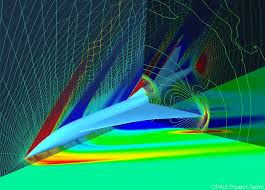
http://www.globalsecurity.org/space/systems/images/x-43a-engine-comparison.jpg

The aircraft that holds the record as the fastest is NASA's X-43A. Having reached Mach 9.6, this unmanned aircraft can definitely be considered a hyper sonic. X-43s are powered by highly modified ramjets called scramjets or Supersonic Combustion Ramjets. When the designers of this record-breaking engine first started out, they claimed such jets could top at Mach 15.

It is too early to tell whether they overestimated the capabilities of this particular technology.

Regardless whether the Mach 15 barrier can be breached by a scramjet powered aircraft, it looks like NASA is hell-bent (as always) on making new hyper sonic records in the not-so-distant future. Already they have partnered with universities and industries in California, Texas and Virginia, designating them as national hyper sonic science centers.

The main objective of these centers is to design more powerful propulsion systems as well as other aircraft components that, when brought together, will usher in a new breed of hyper sonic planes. The University of Virginia in Charlottesville, Texas A&M University in College Station, and Teledyne Scientific & Imaging LLC of Thousand Oaks, California, have been tapped for this purpose.

There are certain things to consider when designing an aircraft that might reach hyper sonic speeds. Perhaps the most crucial is the temperature of flow around the aircraft. At such fast speeds, the temperature can rise very high. This can affect the chemical properties of the air around it. Even low hypersonic speeds (a little over Mach 5) can provide the conditions that will allow molecular bonds to vibrate vigorously.

This in turn can increase or decrease the forces exerted by the surrounding air on the aircraft. As the aircraft accelerates to high hypersonic levels the bonds can break and the surrounding air becomes ionized, i.e., they turn into plasma. To even complicate matters, accompanying shock waves can cause rapid increases to pressure, temperature and density. These and many other factors will have to be looked into by researchers in the hyper sonic science centers.

AERODYNAMICS

AERODYNAMICS

Aerodynamics is a branch of dynamics concerned with studying the motion of air, particularly when it interacts with a moving object. Aerodynamics is a subfield of fluid dynamics and gas dynamics, with much theory shared between them. Aerodynamics is often used synonymously with gas dynamics, with the difference being that gas dynamics applies to all gases. Understanding the motion of air (often called a flow field) around an object enables the calculation of forces and moments acting on the object. Typical properties calculated for a flow field include velocity, pressure, density and temperature as a function of position and time. By defining a control volume around the flow field, equations for the conservation of mass, momentum, and energy can be defined and used to solve for the properties. The use of aerodynamics through mathematical analysis, empirical approximation and wind tunnel experimentation form the scientific basis for heavier-than-air flight.

WING

A wing is a surface used to produce lift for flight through the air or another gaseous or fluid medium. The cross-sectional shape of a wing is referred to as an airfoil. The word originally referred only to the foremost limbs of birds, but has been extended to include the wings of insects (see insect wing), bats, pterosaurs, and aircraft. The term is also applied to an inverted wing used to generate downforce in auto racing.


A common misconception is that it is the shape of the wing that is essential to generate lift by having a longer path on the top rather than the underside. While wings with this shape are always used in subsonic aircraft and sailing, symmetrically shaped wings can also generate lift by having a positive angle of attack and deflecting air downward. The symmetric approach is less efficient, lacking the lift provided by cambered wings at zero angle of attack. The source of this lift is a point of contention (see the talk page of this article), with various sources ascribing it to the Venturi effect (very similar to the Bernoulli effect), the Coanda effect, or even asserting that neither is relevant.

INCOMPRESSIBLE AERODYNAMICS

An incompressible flow is characterized by a constant density despite flowing over surfaces or inside ducts. A flow can be considered incompressible as long as its speed is low. For higher speeds, the flow will begin to compress as it comes into contact with surfaces. The Mach number is used to distinguish between incompressible and compressible flows.

Subsonic flow

Subsonic (or low-speed) aerodynamics is the study of inviscid, incompressible and irrotational aerodynamics where the differential equations used are a simplified version of the governing equations of fluid dynamics. It is a special case of Subsonic aerodynamics.

Mach number in the flow does not exceed 0.3 (about 335 feet (102m) per second or 228 miles (366 km) per hour at 60oF).

COMPRESSIBLE AERODYNAMICS

According to the theory of aerodynamics, a flow is considered to be compressible if its change in density with respect to pressure is non-zero along a streamline. This means that - unlike incompressible flow - changes in density must be considered. In general, this is the case where the Mach number in part or all of the flow exceeds 0.3. The Mach .3 value is rather arbitrary, but it is used because gas flows with a Mach number below that value demonstrate changes in density with respect to the change in pressure of less than 5%. Furthermore, that maximum 5% density change occurs at the stagnation point of an object immersed in the gas flow and the density changes around the rest of the object will be significantly lower. Transonic, supersonic, and hypersonic flows are all compressible.

Transonic flow

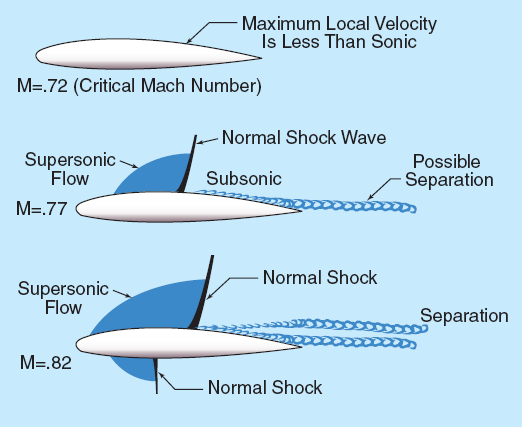
File:FAA-8083-3A Fig 15-9.png

The term Transonic refers to a range of velocities just below and above the local speed of sound (generally taken as Mach 0.8–1.2). It is defined as the range of speeds between the critical Mach number, when some parts of the airflow over an aircraft become supersonic, and a higher speed, typically near Mach 1.2, when all of the airflow is supersonic. Between these speeds some of the airflow is supersonic, and some is not.

Supersonic flow

Supersonic flow behaves very differently from subsonic flow. Fluids react to differences in pressure; pressure changes are how a fluid is "told" to respond to its environment. Therefore, since sound is in fact an infinitesimal pressure difference propagating through a fluid, the speed of sound in that fluid can be considered the fastest speed that "information" can travel in the flow. This difference most obviously manifests itself in the case of a fluid striking an object. In front of that object, the fluid builds up a stagnation pressure as impact with the object brings the moving fluid to rest. In fluid traveling at subsonic speed, this pressure disturbance can propagate upstream, changing the flow pattern ahead of the object and giving the impression that the fluid "knows" the object is there and is avoiding it.

When the fluid finally does strike the object, it is forced to change its properties -- temperature, density, pressure, and Mach number -- in an extremely violent and irreversible fashion called a shock wave.


Supersonic flow behaves very differently from subsonic flow. The term supersonic is used to define a speed that is over the speed of sound (Mach 1). In dry air at 20 °C (68 °F), the threshold value required for an object to be traveling at a supersonic speed is approximately 343 m/s, (1,125 ft/s, 768 mph or 1,236 km/h). Speeds greater than 5 times the speed of sound are often referred to as hypersonic. Speeds where only some parts of the air around an object (such as the ends of rotor blades) reach supersonic speeds.

Hypersonic flow


The precise Mach number at which a craft can be said to be fully hypersonic is elusive, especially since physical changes in the airflow (molecular dissociation, ionization) occur at quite different speeds. Generally, a combination of effects become important "as a whole" around Mach 5. The hypersonic regime is often defined as speeds where ramjets do not produce net thrust. This is a nebulous definition in itself, as there exists a proposed change to allow them to operate in the hypersonic regime (the Scramjet).


COMPARISON OF REGIMES

Regime Mach Mph km/h
General Plane Characteristics
Subsonic <1.0 <768 <1,230
Most often propeller-driven and commercial turbofan aircraft with straight wings
Transonic 0.8-1.2 610-768 980-1,475
Sharp intakes; compressibility becomes noticeable; slightly swept wings
Supersonic 1.0-5.0 768-3,840 1,230-6,150
Sharper edges; tailplane is a stabilator
Hypersonic 5.0-10.0 3,840-7,680 6,150-12,300
Cooled nickel-titanium skin; highly integrated, small wings, see X-51A Waverider
High-hypersonic 10.0-25.0 7,680-16,250 12,300-30,740
Silica thermal tiles, blunt wings
Re-entry speeds >25.0 >16,250 >30,740
Ablative heat shield; no wings; blunt capsule shape


AIRCRAFT JET ENGINE

AIRCRAFT JET ENGINE

AIRCRAFT JET ENGINE


An aircraft engine is a propulsion system for an aircraft. The key part of a jet engine is the exhaust nozzle. This is the part which produces thrust for the jet; the hot airflow from the engine is accelerated when exiting the nozzle, creating thrust, which, in conjunction with the pressures acting inside the engine which are maintained and increased by the constriction of the nozzle, pushes the aircraft forward.


The most common jet propulsion engines flown are turbojet, turbofan and rocket. Other types such as pulsejets, ramjets, scramjets and Pulse Detonation Engines have also flown.

TURBOPROP

Turboprop engines are a type of aircraft powerplant that use a gas turbine to drive a propeller. The gas turbine is designed specifically for this application, with almost all of its output being used to drive the propeller. The engine's exhaust gases contain little energy compared to a jet engine and play a minor role in the propulsion of the aircraft.


The propeller is coupled to the turbine through a reduction gear that converts the high RPM, low torque output to low RPM, high torque. The propeller itself is normally a constant speed (variable pitch) type similar to that used with larger reciprocating aircraft engines.

Turboprop engines are generally used on small subsonic aircraft, but some aircraft outfitted with turboprops have cruising speeds in excess of 500 kt (926 km/h, 575 mph). Large military and civil aircraft, such as the Lockheed L-188 Electra and the Tupolev Tu-95, have also used turboprop power. The Airbus A400M is powered by four Europrop TP400 engines, which are the third most powerful turboprop engines ever produced, after the Kuznetsov NK-12 and Progress D-27.

Turboprops are very efficient at modest flight speeds (below 450 mph) because the jet velocity of the propeller (and exhaust) is relatively low. Due to the high price of turboprop engines, they are mostly used where high-performance short-takeoff and landing (STOL) capability and efficiency at modest flight speeds are required. The most common application of turboprop engines in civilian aviation is in small commuter aircraft, where their greater reliability than reciprocating engines offsets their higher initial cost.

TURBOSHAFT

A turboshaft engine is a form of gas turbine which is optimized to produce shaft power, rather than jet thrust. In principle, a turboshaft engine is similar to a turbojet, except the former features additional turbine expansion to extract heat energy from the exhaust and convert it into output shaft power.


Turboshaft engines are commonly used in applications which require a sustained high power output, high reliability, small size and light weight. These include helicopters, auxiliary power units, boats and ships, tanks, hovercraft, and stationary equipment.

The general layout of a turboshaft is similar to that of a turboprop. The main difference is that a turboprop is structurally designed to support the loads created by a rotating propeller, as the propeller is not attached to anything but the engine itself. In contrast, turboshaft engines usually drive a transmission which is not structurally attached to the engine. The transmission is attached to the vehicle structure and supports the loads created instead of the engine. However, in practice many of the same engines are built in both turboprop and turboshaft versions, with only minor differences.

TURBOJET

Turbojets are the oldest kind of general-purpose jet engines. Turbojets consist of an air inlet, an air compressor, a combustion chamber, a gas turbine (that drives the air compressor) and a nozzle. The air is compressed into the chamber, heated and expanded by the fuel combustion and then allowed to expand out through the turbine into the nozzle where it is accelerated to high speed to provide propulsion.


Turbojets are quite inefficient (if flown below about Mach 2) and very noisy. Most modern aircraft use turbofans instead for economic reasons. Turbojets are still very common in medium range cruise missiles, due to their high exhaust speed, low frontal area and relative simplicity.

TURBOFAN

A turbofan is a type of aircraft gas turbine engine that provides thrust using a combination of a ducted fan and a jet exhaust nozzle. Part of the airstream from the ducted fan passes through the core, providing oxygen to burn fuel to create power. However, the rest of the air flow bypasses the engine core and mixes with the faster stream from the core, significantly reducing exhaust noise. The rather slower bypass airflow produces thrust more efficiently than the high-speed air from the core, and this reduces the specific fuel consumption.


A few designs work slightly differently and have the fan blades as a radial extension of an aft-mounted low-pressure turbine unit. Turbofans have a net exhaust speed that is much lower than a turbojet. This makes them much more efficient at subsonic speeds than turbojets, and somewhat more efficient at supersonic speeds up to roughly Mach 1.6, but have also been found to be efficient when used with continuous afterburner at Mach 3 and above. However, the lower speed also reduces thrust at high speeds.

All of the jet engines used in currently manufactured commercial jet aircraft are turbofans. They are used commercially mainly because they are highly efficient and relatively quiet in operation.

PULSEJET

A pulse jet engine (or pulsejet) is a very simple type of jet engine in which combustion occurs in pulses. Pulsejet engines can be made with few or no moving parts, and are capable of running statically.


Pulsejet engines are a unique type of jet engine, able to operate statically with few or no moving parts. There are two main types of pulsejet engines, both types use resonant combustion and harness the expanding combustion products to form a pulsating exhaust jet, which produces thrust intermittently.

RAMJET

A ramjet, sometimes referred to as a stovepipe jet, or an athodyd, is a form of jet engine using the engine's forward motion to compress incoming air, without a rotary compressor. Ramjets cannot produce thrust at zero airspeed and thus cannot move an aircraft from a standstill.


Ramjets require considerable forward speed to operate well, and as a class work most efficiently at speeds around Mach 3. This type of jet can operate up to speeds of at least Mach 6.

Ramjets can be particularly useful in applications requiring a small and simple engine for high speed use; such as missiles, while weapon designers are looking to use ramjet technology in artillery shells to give added range; it is anticipated that a 120-mm mortar shell, if assisted by a ramjet, could attain a range of 22 mi (35 km). They have also been used successfully, though not efficiently, as tip jets on helicopter rotors.

SCRAMJET

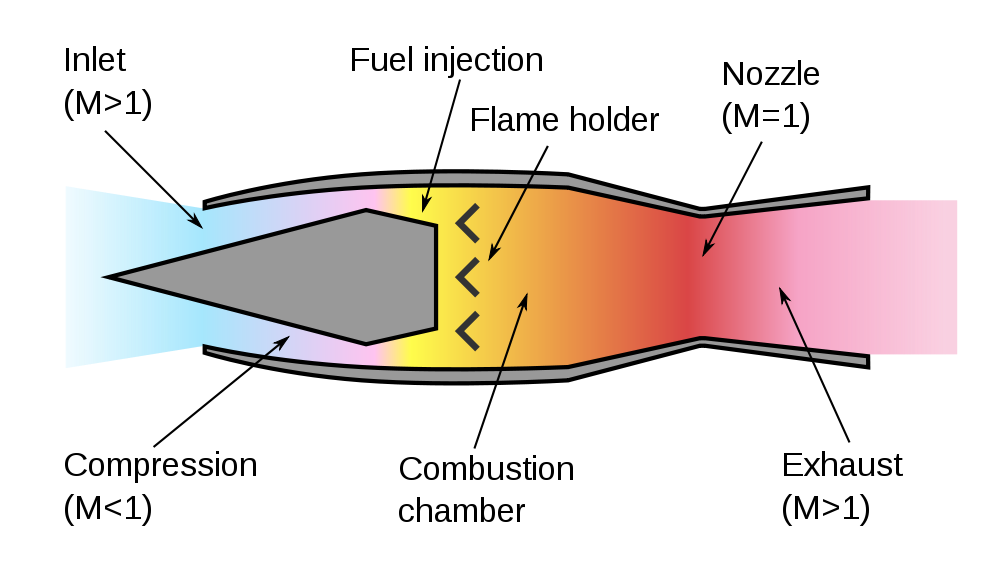
A scramjet (supersonic combustion ramjet) is a variation of a ramjet distinguished by supersonic combustion. A scramjet, like a ramjet, essentially consists of a constricted tube through which inlet air is compressed by the high speed of the vehicle, a combustion chamber where fuel is combusted, and a nozzle through which the exhaust jet leaves at higher speed than the inlet air.


Most jet engines use a fan-style compressor to squeeze air into the engine, then spray fuel into the compressed air and ignite it to produce thrust as it exits the engine through an expansion nozzle. A ramjet uses the speed of the aircraft to compress the air, so very few moving parts are needed to operate it. In particular there is no high-speed turbine, as in a turbofan or turbojet engine, that is expensive to produce and can be a major point of failure.

Most ramjets decelerate the incoming air to subsonic speeds (relative to the engine) so that combustion can be more easily sustained. However, higher vehicle speeds cause higher increases in air pressure and temperature during this deceleration at the air intake. The properties of known materials impose effective limits on what pressures and temperatures an engine can withstand, thus limiting ramjet airspeed to about Mach 5—if the air must be decelerated inside the engine to below Mach 1. If combustion can be sustained in supersonic air inside the engine, then the vehicle can fly at higher speeds while engine inlet air deceleration pressures and temperatures remain at tolerable levels.

In order to achieve sufficient internal air pressure and temperature to function, a ramjet must be accelerated by some other means of propulsion. A scramjet, designed for higher speeds, requires acceleration to hypersonic speed before it can become active. A scramjet requires supersonic airflow through the engine; thus, similar to a ramjet, scramjets have a minimum functional speed, about Mach 4.5 for current models.

Projections for the top speed of a scramjet engine (without additional oxidiser input) vary between Mach 12 and Mach 24 (orbital velocity).

TYPES OF LASER

TYPES OF LASER

This is a list of laser types, their operational wavelengths, and their applications. Thousands of kinds of laser are known, but most of them are used only for specialised research.

LIST OF LASER TYPES

http://upload.wikimedia.org/wikipedia/commons/thumb/4/48/Commercial_laser_lines.svg/1000px-Commercial_laser_lines.svg.png

Gas lasers

Laser gain medium and type Operation wavelength(s) Pump source Applications and notes
Helium-neon laser 632.8 nm (543.5 nm, 593.9 nm, 611.8 nm, 1.1523 μm, 1.52 μm, 3.3913 μm) Electrical discharge Interferometry, holography, spectroscopy, barcode scanning, alignment, optical demonstrations.
Argon laser 454.6 nm, 488.0 nm, 514.5 nm (351 nm, 363.8, 457.9 nm, 465.8 nm, 476.5 nm, 472.7 nm, 528.7 nm, also frequency doubled to provide 244 nm, 257 nm) Electrical discharge Retinal phototherapy (for diabetes), lithography, confocal microscopy, spectroscopy pumping other lasers.
Krypton laser 416 nm, 530.9 nm, 568.2 nm, 647.1 nm, 676.4 nm, 752.5 nm, 799.3 nm Electrical discharge Scientific research, mixed with argon to create "white-light" lasers, light shows.
Xenon ion laser Many lines throughout visible spectrum extending into the UV and IR. Electrical discharge Scientific research.
Nitrogen laser 337.1 nm Electrical discharge Pumping of dye lasers, measuring air pollution, scientific research. Nitrogen lasers can operate superradiantly (without a resonator cavity). Amateur laser construction. See TEA laser
Carbon dioxide laser 10.6 μm, (9.4 μm) Transverse (high power) or longitudinal (low power) electrical discharge Material processing (cutting, welding, etc.), surgery.
Carbon monoxide laser 2.6 to 4 μm, 4.8 to 8.3 μm Electrical discharge Material processing (engraving, welding, etc.), photoacoustic spectroscopy.
Excimer laser 193 nm (ArF), 248 nm (KrF), 308 nm (XeCl), 353 nm (XeF) Excimer recombination via electrical discharge Ultraviolet lithography for semiconductor manufacturing, laser surgery, LASIK.

Chemical lasers

Used as directed-energy weapons.
Laser gain medium and type Operation wavelength(s) Pump source Applications and notes
Hydrogen fluoride laser 2.7 to 2.9 μm for Hydrogen fluoride (<80%>Atmospheric transmittance) Chemical reaction in a burning jet of ethylene and nitrogen trifluoride (NF3) Used in research for laser weaponry by the U.S. DOD, operated in continuous wave mode, can have power in the megawatt range.
Deuterium fluoride laser ~3800 nm (3.6 to 4.2 μm) (~90% Atm. transmittance) chemical reaction MIRACL, Pulsed Energy Projectile & Tactical High Energy Laser
COIL (Chemical oxygen-iodine laser) 1.315 μm (<70%>Atmospheric transmittance) Chemical reaction in a jet of singlet delta oxygen and iodine Laser weaponry, scientific and materials research, laser used in the U.S. military's Airborne laser, operated in continuous wave mode, can have power in the megawatt range.
Agil (All gas-phase iodine laser) 1.315 μm (<70%>Atmospheric transmittance) Chemical reaction of chlorine atoms with gaseous hydrazoic acid, resulting in excited molecules of nitrogen chloride, which then pass their energy to the iodine atoms. Scientific, weaponry, aerospace.

Dye lasers

Laser gain medium and type Operation wavelength(s) Pump source Applications and notes
Dye lasers 390-435 nm (stilbene), 460-515 nm (coumarin 102), 570-640 nm (rhodamine 6G), many others Other laser, flashlamp Research, spectroscopy, birthmark removal, isotope separation. The tuning range of the laser depends on which dye is used.

Metal-vapor lasers

Laser gain medium and type Operation wavelength(s) Pump source Applications and notes
Helium-cadmium (HeCd) metal-vapor laser 441.563 nm, 325 nm Electrical discharge in metal vapor mixed with helium buffer gas. Printing and typesetting applications, fluorescence excitation examination (ie. in U.S. paper currency printing), scientific research.
Helium-mercury (HeHg) metal-vapor laser 567 nm, 615 nm Rare, scientific research, amateur laser construction.
Helium-selenium (HeSe) metal-vapor laser up to 24 wavelengths between red and UV Rare, scientific research, amateur laser construction.
Helium-silver (HeAg) metal-vapor laser[2] 224.3 nm Scientific research
Strontium Vapor Laser 430.5 nm Scientific research
Neon-copper (NeCu) metal-vapor laser[2] 248.6 nm Electrical discharge in metal vapor mixed with neon buffer gas. Scientific research
Copper vapor laser 510.6 nm, 578.2 nm Electrical discharge Dermatological uses, high speed photography, pump for dye lasers.
Gold vapor laser 627 nm Rare, dermatological and photodynamic therapy uses.

Solid-state lasers

Laser gain medium and type Operation wavelength(s) Pump source Applications and notes
Ruby laser 694.3 nm Flashlamp Holography, tattoo removal. The first type of visible light laser invented; May 1960.
Nd:YAG laser 1.064 μm, (1.32 μm) Flashlamp, laser diode Material processing, rangefinding, laser target designation, surgery, research, pumping other lasers (combined with frequency doubling to produce a green 532 nm beam). One of the most common high power lasers. Usually pulsed (down to fractions of a nanosecond)
Er:YAG laser 2.94 μm Flashlamp, laser diode Periodontal scaling, Dentistry
Neodymium YLF (Nd:YLF) solid-state laser 1.047 and 1.053 μm Flashlamp, laser diode Mostly used for pulsed pumping of certain types of pulsed Ti:sapphire lasers, combined with frequency doubling.
Neodymium doped Yttrium orthovanadate (Nd:YVO4) laser 1.064 μm laser diode Mostly used for continuous pumping of mode-locked Ti:sapphire or dye lasers, in combination with frequency doubling. Also used pulsed for marking and micromachining. A frequency doubled nd:YVO4 laser is also the normal way of making a green laser pointer.
Neodymium doped yttrium calcium oxoborate Nd:YCa4O(BO3)3 or simply Nd:YCOB ~1.060 μm (~530 nm at second harmonic) laser diode Nd:YCOB is a so called "self-frequency doubling" or SFD laser material which is both capable of lasing and which has nonlinear characteristics suitable for second harmonic generation. Such materials have the potential to simplify the design of high brightness green lasers.
Neodymium glass (Nd:Glass) laser ~1.062 μm (Silicate glasses), ~1.054 μm (Phosphate glasses) Flashlamp, laser diode Used in extremely high power (terawatt scale), high energy (megajoules) multiple beam systems for inertial confinement fusion. Nd:Glass lasers are usually frequency tripled to the third harmonic at 351 nm in laser fusion devices.
Titanium sapphire (Ti:sapphire) laser 650-1100 nm Other laser Spectroscopy, LIDAR, research. This material is often used in highly-tunable mode-locked infrared lasers to produce ultrashort pulses and in amplifier lasers to produce ultrashort and ultra-intense pulses.
Thulium YAG (Tm:YAG) laser 2.0 μm Laser diode LIDAR.
Ytterbium YAG (Yb:YAG) laser 1.03 μm Laser diode, flashlamp Optical refrigeration, materials processing, ultrashort pulse research, multiphoton microscopy, LIDAR.
Ytterbium:2O3 (glass or ceramics) laser 1.03 μm Laser diode ultrashort pulse research, [3]
Ytterbium doped glass laser (rod, plate/chip, and fiber) 1. μm Laser diode. Fiber version is capable of producing several-kilowatt continuous power, having ~70-80% optical-to-optical and ~25% electrical-to-optical efficiency. Material processing: cutting, welding, marking; nonlinear fiber optics: broadband fiber-nonlinearity based sources, pump for fiber Raman lasers; distributed Raman amplification pump for telecommunications.
Holmium YAG (Ho:YAG) laser 2.1 μm Laser diode Tissue ablation, kidney stone removal, dentistry.
Cerium doped lithium strontium (or calcium) aluminum fluoride (Ce:LiSAF, Ce:LiCAF) ~280 to 316 nm Frequency quadrupled Nd:YAG laser pumped, excimer laser pumped, copper vapor laser pumped. Remote atmospheric sensing, LIDAR, optics research.
Promethium 147 doped phosphate glass (147Pm+3:Glass) solid-state laser 933 nm, 1098 nm ?? Laser material is radioactive. Once demonstrated in use at LLNL in 1987, room temperature 4 level lasing in 147Pm doped into a lead-indium-phosphate glass étalon.
Chromium doped chrysoberyl (alexandrite) laser Typically tuned in the range of 700 to 820 nm Flashlamp, laser diode, mercury arc (for CW mode operation) Dermatological uses, LIDAR, laser machining.
Erbium doped and erbium-ytterbium codoped glass lasers 1.53-1.56 μm Laser diode These are made in rod, plate/chip, and optical fiber form. Erbium doped fibers are commonly used as optical amplifiers for telecommunications.
Trivalent uranium doped calcium fluoride (U:CaF2) solid-state laser 2.5 μm Flashlamp First 4-level solid state laser (November 1960) developed by Peter Sorokin and Mirek Stevenson at IBM research labs, second laser invented overall (after Maiman's ruby laser), liquid helium cooled, unused today. [1]
Divalent samarium doped calcium fluoride (Sm:CaF2) laser 708.5 nm Flashlamp Also invented by Peter Sorokin and Mirek Stevenson at IBM research labs, early 1961. Liquid helium cooled, unused today. [2]
F-Center laser. 2.3-3.3 μm Ion laser Spectroscopy

Semiconductor lasers

Laser gain medium and type Operation wavelength(s) Pump source Applications and notes
Semiconductor laser diode (general information) 0.4-20 μm, depending on active region material. Electrical current Telecommunications, holography, printing, weapons, machining, welding, pump sources for other lasers.
GaN 0.4 μm Optical discs.
AlGaInP, AlGaAs 0.63-0.9 μm Optical discs, laser pointers, data communications. 780 nm Compact Disc player laser is the most common laser type in the world. Solid-state laser pumping, machining, medical.
InGaAsP 1.0-2.1 μm Telecommunications, solid-state laser pumping, machining, medical..
lead salt 3-20 μm
Vertical cavity surface emitting laser (VCSEL) 850 - 1500 nm, depending on material Telecommunications
Quantum cascade laser Mid-infrared to far-infrared. Research,Future applications may include collision-avoidance radar, industrial-process control and medical diagnostics such as breath analyzers.
Hybrid silicon laser Mid-infrared Research

Other types of lasers

Laser gain medium and type Operation wavelength(s) Pump source Applications and notes
Free electron laser A broad wavelength range (about 100 nm - several mm); one free electron laser may be tunable over a wavelength range relativistic electron beam atmospheric research, material science, medical applications.
Gas dynamic laser Several lines around 10.5 um; other frequencies may be possible with different gas mixtures Spin state population inversion in carbon dioxide molecules caused by supersonic adiabatic expansion of mixture of nitrogen and carbon dioxide Military applications; can operate in CW mode at several megawatts optical power.
"Nickel-like" Samarium laser X-rays at 7.3 nm wavelength Lasing in ultra-hot samarium plasma formed by double pulse terawatt scale irradiation fluences created by Rutherford Appleton Laboratory's Nd:glass Vulcan laser. [3] First demonstration of efficient "saturated" operation of a sub–10 nm X-ray laser, possible applications in high resolution microscopy and holography, operation is close to the "water window" at 2.2 to 4.4 nm where observation of DNA structure and the action of viruses and drugs on cells can be examined.
Raman laser, uses inelastic stimulated Raman scattering in a nonlinear media, mostly fiber, for amplification 1-2 μm for fiber version Other laser, mostly Yb-glass fiber lasers Complete 1-2 μm wavelength coverage; distributed optical signal amplification for telecommunications; optical solitons generation and amplification
Nuclear pumped laser See gas lasers Nuclear fission Research


TYPES OF ROCKET ENGINES

TYPES OF ROCKET ENGINES


PHYSICALLY POWERED
Type
Description
Advantages
Disadvantages
Partially filled pressurised carbonated drinks container with tail and nose weighting
Very simple to build
Altitude typically limited to a few hundred feet or so (world record is 623 meters/2044 feet)
A non combusting form, used for vernier thrusters
Non contaminating exhaust
Extremely low performance
Hot water is stored in a tank at high temperature/pressure and turns to steam in nozzle
Simple, fairly safe, under 200 seconds Isp
Low overall performance due to heavy tank

CHEMICALLY POWERED
Type
Description
Advantages
Disadvantages
Ignitable, self sustaining solid fuel/oxidiser mixture ("grain") with central hole and nozzle
Simple, often no moving parts, reasonably good mass fraction, reasonable Isp. A thrust schedule can be designed into the grain.
Once lit, extinguishing it is difficult although often possible, cannot be throttled in real time; handling issues from ignitable mixture, lower performance than liquid rockets, if grain cracks it can block nozzle with disastrous results, cracks burn and widen during burn. Refuelling grain harder than simply filling tanks, Lower specific Impulse than Liquid Rockets.
Separate oxidiser/fuel, typically oxidiser is liquid and kept in a tank, the other solid with central hole
Quite simple, solid fuel is essentially inert without oxidiser, safer; cracks do not escalate, throttleable and easy to switch off.
Some oxidisers are monopropellants, can explode in own right; mechanical failure of solid propellant can block nozzle (very rare with rubberised propellant), central hole widens over burn and negatively affects mixture ratio.
Propellant such as Hydrazine, Hydrogen Peroxide or Nitrous Oxide, flows over catalyst and exothermically decomposes and hot gases are emitted through nozzle
Simple in concept, throttleable, low temperatures in combustion chamber
catalysts can be easily contaminated, monopropellants can detonate if contaminated or provoked, Isp is perhaps 1/3 of best liquids
Two fluid (typically liquid) propellants are introduced through injectors into combustion chamber and burnt
Up to ~99% efficient combustion with excellent mixture control, throttleable, can be used with turbopumps which permits incredibly lightweight tanks, can be safe with extreme care
Pumps needed for high performance are expensive to design, huge thermal fluxes across combustion chamber wall can impact reuse, failure modes include major explosions, a lot of plumbing is needed.
Rocket takes off as a bipropellant rocket, then turns to using just one propellant as a monopropellant
Simplicity and ease of control
Lower performance than bipropellants
Three different propellants (usually hydrogen, hydrocarbon and liquid oxygen) are introduced into a combustion chamber in variable mixture ratios, or multiple engines are used with fixed propellant mixture ratios and throttled or shut down
Reduces take-off weight, since hydrogen is lighter; combines good thrust to weight with high average Isp, improves payload for launching from Earth by a sizeable percentage
Similar issues to bipropellant, but with more plumbing, more R&D
Essentially a ramjet where intake air is compressed and burnt with the exhaust from a rocket
Mach 0 to Mach 4.5+ (can also run exoatmospheric), good efficiency at Mach 2 to 4
Similar efficiency to rockets at low speed or exoatmospheric, inlet difficulties, a relatively undeveloped and unexplored type, cooling difficulties, very noisy, thrust/weight ratio is similar to ramjets.
A combined cycle turbojet/rocket where an additional oxidizer such as oxygen is added to the airstream to increase maximum altitude
Very close to existing designs, operates in very high altitude, wide range of altitude and airspeed
Atmospheric airspeed limited to same range as turbojet engine, carrying oxidizer like LOX can be dangerous. Much heavier than simple rockets.
Precooled jet engine / LACE (combined cycle with rocket)
Intake air is chilled to very low temperatures at inlet before passing through a ramjet or turbojet engine. Can be combined with a rocket engine for orbital insertion.
Easily tested on ground. High thrust/weight ratios are possible (~14) together with good fuel efficiency over a wide range of airspeeds, mach 0-5.5+; this combination of efficiencies may permit launching to orbit, single stage, or very rapid intercontinental travel.
Exists only at the lab prototyping stage. Examples include RB545, SABRE, ATREX

ELECTRICALLY POWERED
Type
Description
Advantages
Disadvantages
Resistojet rocket (electric heating)
A monopropellant is electrically heated by a filament for extra performance
Higher Isp than monopropellant alone, about 40% higher.
Uses a lot of power and hence gives typically low thrust
Arcjet rocket (chemical burning aided by electrical discharge)
Similar to resistojet in concept but with inert propellant, except an arc is used which allows higher temperatures
1600 seconds Isp
Very low thrust and high power, performance is similar to Ion drive.
Pulsed plasma thruster (electric arc heating; emits plasma)
Plasma is used to erode a solid propellant
High Isp , can be pulsed on and off for attitude control
Low energetic efficiency
Microwave heated plasma with magnetic throat/nozzle
Variable Isp from 1000 seconds to 10,000 seconds
similar thrust/weight ratio with ion drives (worse), thermal issues, as with ion drives very high power requirements for significant thrust, really needs advanced nuclear reactors, never flown, requires low temperatures for superconductors to work

SOLAR POWERED
The Solar thermal rocket would make use of solar power to directly heat reaction mass, and therefore does not require an electrical generator as most other forms of solar-powered propulsion do. A solar thermal rocket only has to carry the means of capturing solar energy, such as concentrators and mirrors. The heated propellant is fed through a conventional rocket nozzle to produce thrust. The engine thrust is directly related to the surface area of the solar collector and to the local intensity of the solar radiation and inversely proportional to the Isp.
Type
Description
Advantages
Disadvantages
Propellant is heated by solar collector
Simple design. Using hydrogen propellant, 900 seconds of Isp is comparable to Nuclear Thermal rocket, without the problems and complexity of controlling a fission reaction. Using higher–molecular-weight propellants, for example water, lowers performance.
Only useful once in space, as thrust is fairly low, but hydrogen is not easily stored in space, otherwise moderate/low Isp if higher–molecular-mass propellants are used

BEAM POWERED
Type
Description
Advantages
Disadvantages
Propellant is heated by light beam (often laser) aimed at vehicle from a distance, either directly or indirectly via heat exchanger
simple in principle, in principle very high exhaust speeds can be achieved
~1 MW of power per kg of payload is needed to achieve orbit, relatively high accelerations, lasers are blocked by clouds, fog, reflected laser light may be dangerous, pretty much needs hydrogen monopropellant for good performance which needs heavy tankage, some designs are limited to ~600 seconds due to reemission of light since propellant/heat exchanger gets white hot
Propellant is heated by microwave beam aimed at vehicle from a distance
microwaves avoid reemission of energy, so ~900 seconds exhaust speeds might be achieveable
~1 MW of power per kg of payload is needed to achieve orbit, relatively high accelerations, microwaves are absorbed to a degree by rain, reflected microwaves may be dangerous, pretty much needs hydrogen monopropellant for good performance which needs heavy tankage, transmitter diameter is measured in kilometres to achieve a fine enough beam to hit a vehicle at up to 100 km.

NUCLEAR POWERED
Nuclear propulsion includes a wide variety of propulsion methods that use some form of nuclear reaction as their primary power source. Various types of nuclear propulsion have been proposed, and some of them tested, for spacecraft applications:
Type
Description
Advantages
Disadvantages
Radioisotope rocket/"Poodle thruster" (radioactive decay energy)
Heat from radioactive decay is used to heat hydrogen
about 700–800 seconds, almost no moving parts
low thrust/weight ratio.
Nuclear thermal rocket (nuclear fission energy)
propellant (typ. hydrogen) is passed through a nuclear reactor to heat to high temperature
Isp can be high, perhaps 900 seconds or more, above unity thrust/weight ratio with some designs
Maximum temperature is limited by materials technology, some radioactive particles can be present in exhaust in some designs, nuclear reactor shielding is heavy, unlikely to be permitted from surface of the Earth, thrust/weight ratio is not high.
Gas core reactor rocket (nuclear fission energy)
Nuclear reaction using a gaseous state fission reactor in intimate contact with propellant
Very hot propellant, not limited by keeping reactor solid, Isp between 1500 and 3000 seconds but with very high thrust
Difficulties in heating propellant without losing fissionables in exhaust, massive thermal issues particularly for nozzle/throat region, exhaust almost inherently highly radioactive. Nuclear lightbulb variants can contain fissionables, but cut Isp in half.
Fission-fragment rocket (nuclear fission energy)
Fission products are directly exhausted to give thrust

Theoretical only at this point.
Fission sail (nuclear fission energy)
A sail material is coated with fissionable material on one side
No moving parts, works in deep space
Theoretical only at this point.
Nuclear salt-water rocket (nuclear fission energy)
Nuclear salts are held in solution, caused to react at nozzle
Very high Isp, very high thrust
Thermal issues in nozzle, propellant could be unstable, highly radioactive exhaust. Theoretical only at this point.
Nuclear pulse propulsion (exploding fission/fusion bombs)
Shaped nuclear bombs are detonated behind vehicle and blast is caught by a 'pusher plate'
Very high Isp, very high thrust/weight ratio, no show stoppers are known for this technology
Never been tested, pusher plate may throw off fragments due to shock, minimum size for nuclear bombs is still pretty big, expensive at small scales, nuclear treaty issues, fallout when used below Earth's magnetosphere.
Antimatter catalyzed nuclear pulse propulsion (fission and/or fusion energy)
Nuclear pulse propulsion with antimatter assist for smaller bombs
Smaller sized vehicle might be possible
Containment of antimatter, production of antimatter in macroscopic quantities isn't currently feasible. Theoretical only at this point.
Fusion rocket (nuclear fusion energy)
Fusion is used to heat propellant
Very high exhaust velocity
Largely beyond current state of the art.
Antimatter rocket (annihilation energy)
Antimatter annihilation heats propellant
Extremely energetic, very high theoretical exhaust velocity
Problems with antimatter production and handling; energy losses in neutrinos, gamma rays, muons; thermal issues. Theoretical only at this point